Few milestones come with more conflicting advice than first foods. Your grandmother says rice cereal at 3 months, a forum says strict baby-led weaning or bust, and the jar labels say "stage 1" without explaining anything.
The actual science is calmer and simpler than the noise. Here's what major health bodies — and the best trials — say about when and how to start solids.
When: around 6 months, guided by readiness
The CDC, the AAP, and the WHO converge on the same answer: start complementary foods at about 6 months, and not before 4 months. Before then, a baby's gut, oral motor skills, and kidneys aren't ready, and early solids displace the milk they actually need.
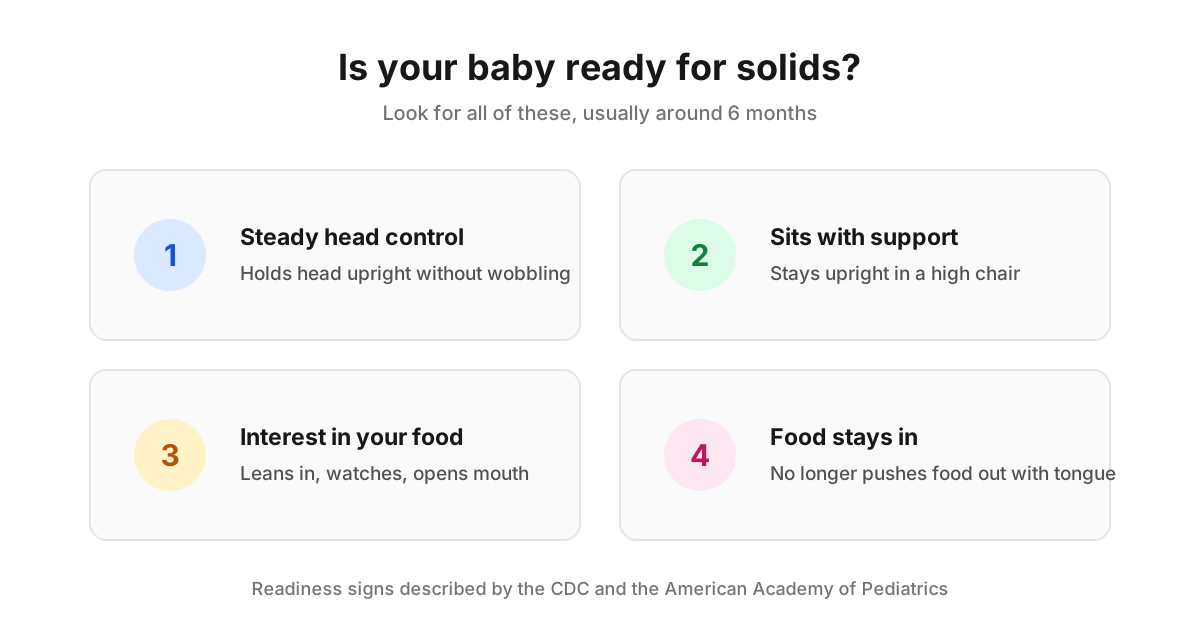
But the calendar is only half the answer. Look for readiness signs, which the CDC lists explicitly:
- Steady head control — holds their head up without bobbing
- Sits upright with support — stable in a high chair
- Genuine interest — leans toward your food, opens their mouth, tracks the spoon
- The tongue-thrust reflex has faded — food goes in instead of being pushed straight back out
A baby who checks every box at 5½ months may be more ready than one who checks none at 6½. When in doubt, ask at your next checkup.
For a clear walkthrough of safe first-food technique, Boston Children's Hospital has a short demonstration:
Why iron is the headline nutrient
Here's the part that often gets lost: around 6 months, the iron stores your baby built up in utero start running low, right as their brain development is demanding more of it. That's why the AAP recommends making iron-rich foods among the very first foods, especially for breastfed babies (formula is iron-fortified):
- Iron-fortified infant cereal (oat, barley, multigrain — no need for rice specifically)
- Puréed, mashed, or soft-shredded meat and poultry
- Beans, lentils, and tofu
- Eggs (also a great early allergen — see below)
Pro tip: pair iron-rich plant foods with vitamin C (strawberries, tomatoes, citrus, peppers) to boost absorption.
Meanwhile, breast milk or formula remains the main source of nutrition through the first year. The WHO frames solids at this age as complementary feeding for a reason — early solids are practice and nutrient top-up, not meal replacement.
Introduce allergens early — yes, really
This is where the advice flipped 180 degrees in the last decade, and where the science is strongest.
The landmark LEAP randomized trial found that introducing peanut early and keeping it in the diet reduced peanut allergy by roughly 80% in high-risk infants compared with avoidance. That result drove the NIAID guidelines on food allergy prevention, which recommend:
- Most babies: introduce peanut-containing foods around 6 months, alongside other solids — freely, at home.
- Babies with severe eczema and/or egg allergy: talk to your pediatrician before introducing peanut; they may recommend allergy testing and introduction as early as 4–6 months, possibly supervised.
Practical safety notes:
- Never whole peanuts or globs of peanut butter — both are choking hazards. Thin peanut butter with warm water or breast milk, or stir peanut powder into purées.
- The same "early and often" logic applies to egg (well-cooked) and other common allergens. Introduce one new allergen at a time, ideally earlier in the day, so you can spot a reaction.
- Delaying allergens does not prevent allergies — the old advice is obsolete.
How: textures, schedule, and a relaxed table
Start where your baby is, then progress
Whether you begin with smooth purées, mashed food, or soft finger foods is genuinely up to you — we compare the approaches in baby-led weaning vs purées: what the evidence actually says. What matters is progressing textures over the months: smooth → mashed → lumpy → soft pieces. The NHS weaning guide is excellent on this progression.
Keep portions and expectations tiny
Early "meals" might be a teaspoon or two, once a day. By 8–9 months, most babies eat two to three small meals; the AAP's sample menu for 8–12 month olds shows what realistic portions look like. Your baby decides how much; you decide what's offered. Forcing "one more bite" works against the self-regulation you're trying to build — a theme that pays off years later (see picky eating in toddlers).
Expect 8–10 (or more) exposures before a new food is accepted. A rejected food isn't a disliked food — it's an unfamiliar one. Many parents like logging first foods and reactions; you can track each new food in your TinyWins journal and watch the list grow.
A realistic first two weeks
There's no official script, but a low-stress opening might look like:
- Days 1–3: one "meal" a day — a teaspoon or two of iron-fortified cereal mixed with breast milk or formula, or soft mashed meat or lentils. Offer after a partial milk feed so baby isn't frantic or full.
- Days 4–7: add a vegetable or fruit alongside the iron food. Single foods make reactions easy to spot, but there's no need to wait days between non-allergen foods.
- Week 2: introduce the first allergen (well-cooked egg or thinned peanut, per the guidance above), early in the day. Keep offering previously "rejected" foods without comment.
If a day gets skipped because everyone's tired — that's fine. Milk is still doing the nutritional heavy lifting.
The short "do not serve" list
- No honey before 12 months (infant botulism risk)
- No cow's milk as a main drink before 12 months (yogurt and cheese in foods are fine from ~6 months)
- No added salt or sugar, and no unpasteurized products
- No choking-hazard shapes: whole grapes, whole nuts, hard raw vegetables, chunks of nut butter, hot dogs cut into coins (quarter grapes lengthwise; cook and soften)
- No juice needed in the first year
And always: baby seated upright in a high chair, supervised, never eating while crawling or reclining.
The bottom line
Start around 6 months when the readiness signs line up. Lead with iron. Bring in allergens early instead of avoiding them. Progress textures, keep mealtimes low-pressure, and let milk carry the nutritional load while your baby learns the delightful, messy skill of eating.
This article is educational and not medical advice. Always check with your pediatrician/provider.