If you're reading this at 3 a.m. with a wide-awake baby on your chest: nothing is wrong with your baby, and nothing is wrong with you. Newborn sleep is chaotic by design — and the first three months are less about fixing it than about surviving it safely.
Here's what the science actually says about sleep from 0 to 3 months, and the small things that genuinely help.
What's normal (spoiler: almost everything)
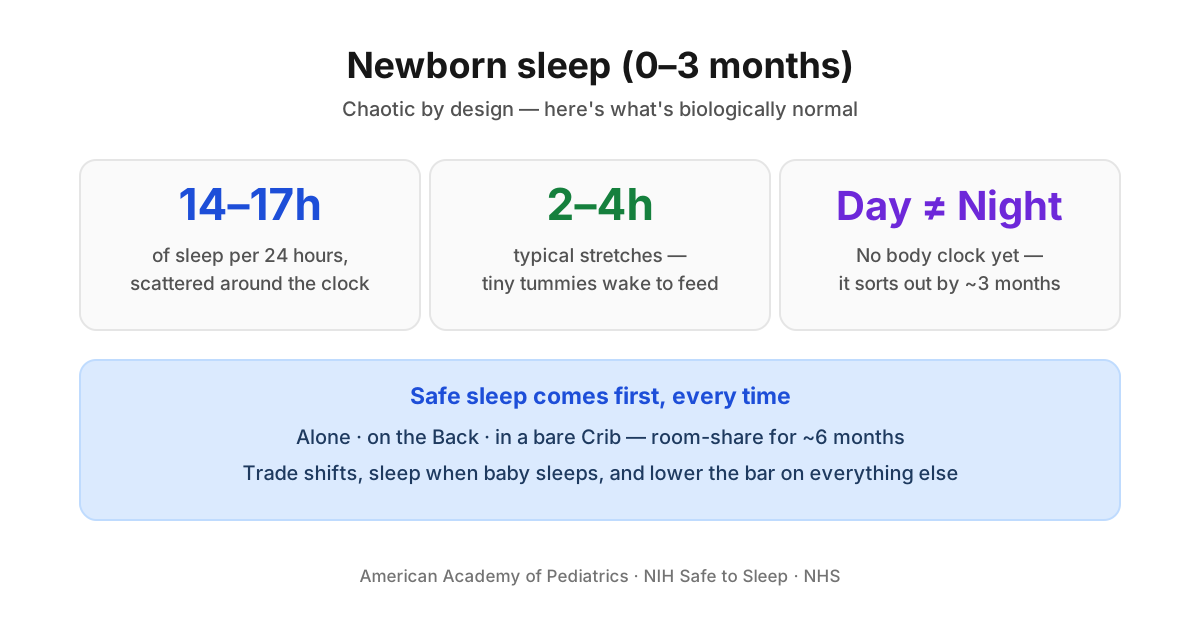
Newborns sleep a lot, but never for long. Expect roughly 14–17 hours of sleep per 24 hours, broken into stretches of 1–3 hours — day and night, around the clock. The NHS notes that newborn sleep patterns vary enormously and that frequent waking to feed is expected, not a problem to solve.
Three facts make newborn sleep feel so different from adult sleep:
- Their sleep cycles are short and "light." Newborns spend about half their sleep in active (REM-like) sleep, where they twitch, grunt, sigh, and flutter their eyelids. It looks like waking. It usually isn't — wait a beat before scooping them up.
- They have no body clock yet. Circadian rhythm — the internal day/night clock — isn't functional at birth and matures over the first two to three months, which is why many newborns party at 2 a.m.
- They must wake to feed. Tiny stomachs mean feeding every 2–3 hours early on, including overnight. The AAP's guidance on infant sleep is clear that night waking in young babies is developmentally normal.
Safe sleep comes first, always
Before any talk of routines or longer stretches, the non-negotiables. The NIH Safe to Sleep campaign and the AAP's 2022 safe sleep recommendations boil down to:
- Back to sleep, every sleep — naps and nighttime, until baby's first birthday.
- A firm, flat, bare sleep surface — a safety-approved crib or bassinet with a fitted sheet. No pillows, blankets, bumpers, or stuffed animals.
- Room-sharing, not bed-sharing — keep baby's sleep surface in your room, ideally for at least the first six months.
- No inclined sleepers, loungers, or weighted swaddles/sleep sacks — these are explicitly recommended against.
We unpack each of these (and the why behind them) in our full guide to the ABCs of safe sleep.
What actually helps in months 0–3
You can't make a newborn sleep through the night — no product, schedule, or hack changes their biology. But a few evidence-aligned habits make the chaos gentler.
1. Teach day vs. night
Since the circadian rhythm is still under construction, give it strong signals:
- Days: bright light, normal household noise, social time after feeds.
- Nights: dim lights, quiet voices, boring diaper changes, straight back to bed.
The NHS recommends exactly this approach to help babies learn that nighttime is different from daytime.
2. Watch wake windows, not the clock
Most newborns can only handle about 45–90 minutes of awake time before becoming overtired — and an overtired newborn fights sleep harder. Look for cues: staring off, fussing, jerky movements, eye rubbing. Catching the drowsy window beats any schedule at this age. (Many parents find it easier to spot patterns once they jot down a few days of feeds and naps — you can track this in your TinyWins journal and watch the rhythm emerge.)
3. Swaddle safely — and stop on time
Swaddling can calm the startle reflex and help some newborns settle. The AAP's take, summarized at healthychildren.org: swaddling is acceptable only for back sleeping, snug at the chest but loose at the hips, and must stop as soon as your baby shows any signs of trying to roll — often around 2 months, sometimes earlier.
4. Try "drowsy but awake" — without pressure
When it's going smoothly, putting your baby down drowsy but not fully asleep gives them practice settling on their own — the AAP suggests it as a gentle early habit. If it fails (it often does at this age), feed or rock them to sleep without guilt. You cannot spoil a newborn.
5. Tag-team and lower the bar
Sleep deprivation is a real safety issue — exhausted parents are more likely to fall asleep in unsafe positions with the baby. The Safe to Sleep guidance specifically warns about falling asleep with a baby on a couch or armchair, which is far riskier than any crib. If you're about to nod off mid-feed, put the baby in the crib first. Split nights with a partner if you can, and treat naps as essential maintenance, not laziness.
What can wait
- Sleep training. Formal methods aren't appropriate before roughly 4–6 months. When you're ready to even think about it, we've laid out the evidence calmly in sleep training methods, explained without the drama.
- Strict schedules. Newborns aren't schedule-capable. Loose rhythms (eat → play → sleep) are plenty.
- Worrying about "bad habits." Rocking, feeding, and contact naps are tools, not traps, in the first months.
- Comparing your baby to anyone else's. Sleep "winners" at 8 weeks are luck, not parenting skill — and the standings reshuffle constantly. The friend whose baby "slept through" at 6 weeks will likely meet a sleep regression later; the parent of the world's lightest sleeper did nothing to cause it. Newborn temperament varies enormously, and almost none of it is within your control.
When to call the pediatrician
Most newborn sleep weirdness is normal, but check in promptly if your baby is unusually hard to wake, too sleepy to feed, has fewer wet diapers than expected, or breathes abnormally during sleep. And bring any sleep questions to well-child visits — that's exactly what they're for.
The big picture
Somewhere between 6 and 12 weeks, most babies start consolidating one longer stretch of night sleep as their circadian rhythm comes online. It won't be linear, and growth spurts will scramble it — but the trajectory bends toward sleep. You're not doing it wrong. You're doing the hardest part.
For a calm, expert-level walk through what's normal in these early months, this conversation with Mayo Clinic pediatricians is worth the listen:
If you're expecting again or planning ahead, our guide to pregnancy nutrition covers the other end of the journey.
This article is educational and not medical advice. Always check with your pediatrician/provider.