Your baby has been fighting a cold for a few days, and now they're suddenly inconsolable — crying harder when you lay them down, waking all night, and warm to the touch. Somewhere in your memory is the idea that tugging at the ear is the telltale sign, except your baby isn't really tugging, so you're stuck guessing. Ear infections are one of the most common reasons for a sick-baby visit, and the signs are genuinely confusing in a child who can't tell you what hurts.
Here's what's actually going on, how to read the real warning signs, and why your pediatrician may recommend watching before reaching for antibiotics.
Why babies get so many ear infections
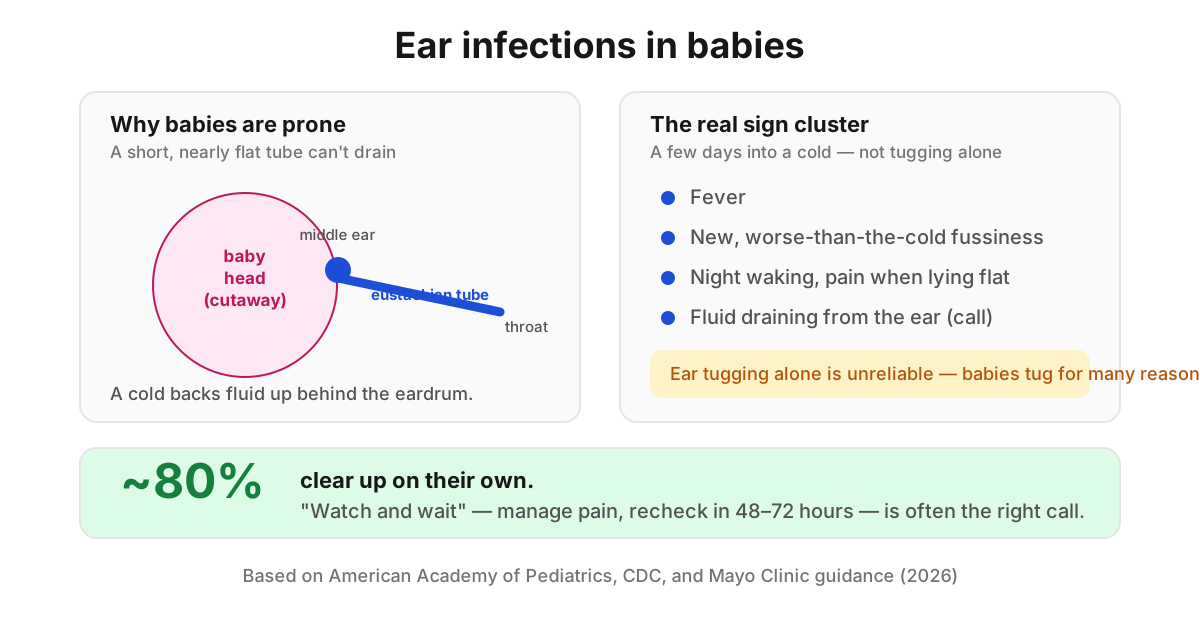
It comes down to plumbing. The eustachian tube is the narrow channel that connects the middle ear to the back of the throat and lets fluid drain away. In a baby, that tube is short, narrow, and nearly horizontal — so when a cold causes congestion and swelling, fluid backs up behind the eardrum instead of draining out, and that warm, trapped fluid is where bacteria and viruses set up shop. As Mayo Clinic explains, this is exactly why kids between 6 months and 2 years get the most ear infections: their eustachian tubes are at their most drainage-unfriendly.
That's also the key fact to hold onto: an ear infection (the medical name is acute otitis media) almost always rides in on the back of a cold or other upper-respiratory bug. It's not random, and it's not something you did wrong. The tubes simply mature and tilt into a better angle as your child grows, which is why ear infections become much rarer after the toddler years.
The real sign cluster (and why ear tugging is overrated)
This is the part that trips up most parents. Ear tugging, on its own, is not a reliable sign of an ear infection. Babies pull at their ears when they're teething, tired, curious about a new body part, or mildly itchy. If you went looking for ear infections every time a baby touched an ear, you'd be at the doctor constantly.
The pattern that actually matters is a cluster of symptoms, usually appearing a few days into a cold, per the American Academy of Pediatrics and Mayo Clinic:
- New or worsening fussiness and crying — often the loudest clue, and frequently worse than the cold alone would explain.
- Fever — not always present, but common.
- Trouble sleeping and extra night waking — lying flat increases the pressure (and pain) behind the eardrum, so babies who were sleeping fine suddenly aren't.
- Crying or pain when lying down, or pulling away during feeds.
- Fluid or pus draining from the ear — this one is a strong sign. It often means the eardrum has released a little pressure, and it usually brings pain relief, but it always warrants a call.
- Reduced appetite — sucking and swallowing change the pressure in the ear and can hurt.
Ear tugging can be part of the picture — it's just not the headline. Worry when it shows up alongside fever, marked fussiness, or disrupted sleep.
One important limit: you can't diagnose this from the outside. Only a clinician looking at the eardrum (with an otoscope, sometimes checking how the eardrum moves) can confirm an ear infection. So the home version of this is pattern-spotting, not diagnosis — if the cluster is there, that's your cue to get the ears looked at.
"Watch and wait": why your doctor may hold off on antibiotics
Parents are often surprised when a pediatrician confirms an ear infection and then doesn't immediately prescribe antibiotics. This isn't your doctor being stingy — it's current best practice.
Around 80% of children's ear infections clear up on their own, without antibiotics, according to the AAP. Many are caused by viruses, which antibiotics don't touch at all, and even bacterial ones frequently resolve as the cold does. So for many mild cases, the AAP and CDC endorse an observation option — sometimes called "watch and wait" or "delayed prescribing":
- Treat the pain and fever in the meantime (acetaminophen, or ibuprofen for babies 6 months and up — dosed by weight; see our dosing safety guide).
- Recheck in 48 to 72 hours. If your child is better, great — you've avoided an unnecessary antibiotic.
- Start antibiotics if things don't improve or get worse. Some doctors send you home with a "just in case" prescription to fill only if your child isn't better in two to three days.
Why hold back? Antibiotics aren't free of downsides — they can cause diarrhea, rashes, and allergic reactions, and overusing them drives antibiotic resistance, which the CDC flags as a real public-health concern. Used carefully, watch-and-wait spares kids medicine they don't need.
When antibiotics are the right call sooner rather than later, per the AAP: babies under 2 years old, especially with infections in both ears; severe ear pain or pain lasting beyond a couple of days; a fever of 102.2°F (39°C) or higher; or a child who is clearly quite sick. In those situations your doctor will usually prescribe right away — and if they do, give the full course exactly as directed, even after your baby seems better.
How to prevent ear infections
You can't bubble-wrap your baby against every cold, but several proven steps lower how often ear infections happen, per the CDC and AAP:
- Stay on schedule with vaccines. The pneumococcal (PCV) vaccine and the annual flu shot both directly reduce ear infections by preventing the infections that lead to them. (Our vaccine schedule explainer walks through the timing.)
- Breastfeed if you can. Breastfeeding, even partially, is associated with fewer ear infections — but fed is best, and this is one factor among many.
- Keep your baby smoke-free. Secondhand smoke irritates and inflames the eustachian tubes, raising infection risk. Keep your home and car smoke-free.
- Never prop a bottle in bed. Letting a baby drink lying flat lets milk pool toward the eustachian tubes. Feed your baby held upright, and don't put them down with a bottle.
- Wash hands and manage cold exposure. Since ear infections follow colds, the ordinary cold-prevention basics help here too. Group daycare means more colds; it's not something to feel guilty about, just a reason the early years run germy.
When to call the doctor — and when it's urgent
Call your pediatrician when you see the sign cluster above — especially fever plus fussiness plus disrupted sleep a few days into a cold, ear pain that isn't easing, or any fluid draining from the ear. Those are reasons to get the ears looked at, not to ride out at home.
Seek care promptly (same day, or urgent care if the office is closed) if you notice:
- A baby under 6 months with a suspected ear infection or unexplained fever — younger babies get evaluated sooner.
- Severe pain, or a baby who is inconsolable and can't be comforted.
- Swelling, redness, or tenderness of the bone behind the ear (a possible sign the infection has spread) — this one needs to be seen right away.
- A stiff neck, a very ill or lethargic appearance, or trouble waking — go in now.
- Symptoms that persist past 2 to 3 days of watch-and-wait, or that clearly worsen.
You know your baby's normal. A level of crying or "off-ness" that doesn't fit any cold you've seen before is always worth a call — pediatric offices field these constantly and would far rather check an ear than have you wait.
A quick word on ear tubes
If your child has repeated ear infections (a common threshold is three or more in six months, or four or more in a year) or fluid that lingers behind the eardrum and affects hearing or speech, your pediatrician may refer you to an ENT to discuss ear tubes (tympanostomy tubes). These tiny tubes ventilate the middle ear so fluid drains. It's a common, quick, low-risk procedure — but most children never need it, and for typical, occasional infections, standard care works just as well. Tubes are for the kids stuck in a frustrating cycle, not for a single ordinary ear infection.
When you're in the thick of a sick stretch, jotting down the timeline — when the cold started, when the fever appeared, each temperature, and any medicine you gave — turns a fuzzy phone call into a useful one. You can keep that running log in your TinyWins journal so the details are right there when the nurse asks.
The bottom line
Babies get ear infections because their eustachian tubes are short and flat, so colds back fluid up behind the eardrum. Don't rely on ear tugging — watch for the real cluster of fever, fussiness, and night waking a few days into a cold. Most ear infections clear on their own, so don't be surprised (or alarmed) if your pediatrician recommends watching and managing pain before antibiotics. And the best prevention is the boring, powerful stuff: vaccines, no secondhand smoke, no bottle in bed, and breastfeeding if it works for you.
This article is educational and not medical advice. Always check with your pediatrician/provider.